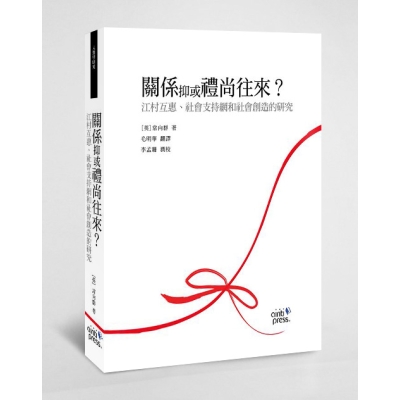
Guanxi or Li shang wanglai? -Reciprocity, Social Support Networks, & Social Creativity in a Chinese Village
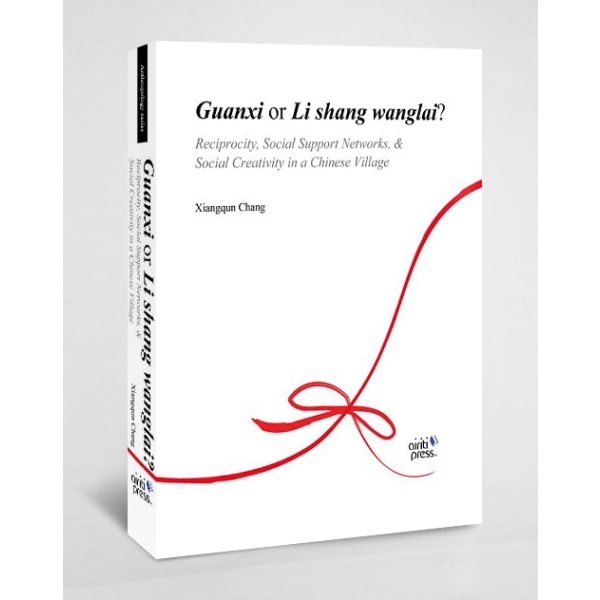
Guanxi or Li shang wanglai? -Reciprocity, Social Support Networks, & Social Creativity in a Chinese Village
NT$1,000
作者:Xiangqun Chang(常向群)/coordinator of the China in Comparative Perspective Network(倫敦政經學院中國比較研究網研究員)
出版日期:2010/06
語文:英文
ISBN/識別號:9789866286186
DOI:10.6140/AP.9789866286186
訂購連結:



Li shang wanglai is a phrase that combines practice and principle. It is what others have discussed as Confucianism. But it is the summation of what is practised in daily life and without the leadership of an elite intelligentsia. With this phrase the author has brought together what had been separately discussed: the social philosophy of bao (asymmetrical reciprocity), the central importance of mianzi and lian (face), the moral economy of renqing (human relationships of fellow-feeling), the art of making guanxiwang (social networks), and much else. She shows how they work together in what might be called a discursive constellation. Using sociological and anthropological theorisations of reciprocal relations in China and Japan, she creates a framework of four dimensions, namely, principled rational calculation, human-feeling, moral, and religious, and four kinds of relationships, namely, instrumental, expressive, negative and generous.
常向群
祖籍中国沈阳,长于南昌,现为英籍并定居于伦敦。政治学学士、社会学硕士、社会人类学博士。现为伦敦政经学院中国比较研究网研究员、中国比较网负责人、《中国比较研究》责任主编。发表过近百万字的中文著述,代表作为《马克思主义社会学论稿》。英文著作包括:Social Support in Rural China (1979-1991): A Statistical Report on Ten Villages (Co-author with Stephan Feuchtwang, London: City University, 1996); Socio-economic Transformation in China and Chinese Woman (Co-editor with West, Zhao and Cheng, Basingstoke, London: Macmillan Press Ltd., 1999)。 Dr Xiangqun Chang is a Visiting Fellow in the Department of Anthropology and coordinator of the China in Comparative Perspective Network (CCPN). She is also special-term professor at the Centre for Social and Cultural Anthropology, Fudan University, and visiting professor at the School of Humanities and Law, Northeastern University. Before coming to the UK, as a university lecturer in sociology, she was extensively published (amounting to one million Chinese characters). Since working and studying in the UK she has developed extensive skills in both quantitative and qualitative analysis and applied them to many projects. Based on a thorough and detailed ethnography of a Chinese village with longitudinal comparisons, she has been developing a general analytical concept—lishang-wanglai (礼尚─往来)—a Chinese model of reciprocity, relatedness and social networks. Currently she is testing the lishang-wanglai model in the area of Chinese entrepreneur relationships inside and outside China with both inter-disciplinary and comparative approaches.
祖籍中国沈阳,长于南昌,现为英籍并定居于伦敦。政治学学士、社会学硕士、社会人类学博士。现为伦敦政经学院中国比较研究网研究员、中国比较网负责人、《中国比较研究》责任主编。发表过近百万字的中文著述,代表作为《马克思主义社会学论稿》。英文著作包括:Social Support in Rural China (1979-1991): A Statistical Report on Ten Villages (Co-author with Stephan Feuchtwang, London: City University, 1996); Socio-economic Transformation in China and Chinese Woman (Co-editor with West, Zhao and Cheng, Basingstoke, London: Macmillan Press Ltd., 1999)。 Dr Xiangqun Chang is a Visiting Fellow in the Department of Anthropology and coordinator of the China in Comparative Perspective Network (CCPN). She is also special-term professor at the Centre for Social and Cultural Anthropology, Fudan University, and visiting professor at the School of Humanities and Law, Northeastern University. Before coming to the UK, as a university lecturer in sociology, she was extensively published (amounting to one million Chinese characters). Since working and studying in the UK she has developed extensive skills in both quantitative and qualitative analysis and applied them to many projects. Based on a thorough and detailed ethnography of a Chinese village with longitudinal comparisons, she has been developing a general analytical concept—lishang-wanglai (礼尚─往来)—a Chinese model of reciprocity, relatedness and social networks. Currently she is testing the lishang-wanglai model in the area of Chinese entrepreneur relationships inside and outside China with both inter-disciplinary and comparative approaches.
Contents
Recommendations from scholars
Preface
Introduction
Recommendations from scholars
Preface
Introduction
PART ONE VILLAGE PORTRAITURE
Chapter I Economic, administrative and informal systems
Chapter II Local customs (I)
Chapter III Local customs (II)
PART TWO THE PRACTICE OF “LISHANG-WANGLAI”
Chapter IV Generous wanglai
Chapter V Expressive wanglai in life cycle events (I)
Chapter VI Expressive wanglai in life cycle events (II)
Chapter VII Expressive wanglai in annual cycle and emergency events
Chapter VIII Instrumental and negative wanglai
PART THREE “LISHANG-WANGLAI” MODEL
Chapter IX Theoretical approaches and exploration of “lishang-wanglai”
Chapter X Review of related Chinese notions
Chapter XI Construction of the “lishang-wanglai” model
Chapter XII Tests and applications of the “lishang-wanglai” model
Conclusion
Appendix
I. Conversion of Currencies and Measures
II.List of place names
III. Characters List
Bibliography
Postscript
联络人:萧杰如小姐
Tel : (+866-2) 2926 6006 #6218
FAX (+866-2) 2926 6016
地址 : 234 新北市永和区成功路一段80号18楼
Email: aporder@airiti.com